+61 415 139 814
  +91 875 047 8831

Marketing Theories: The Communications Mix
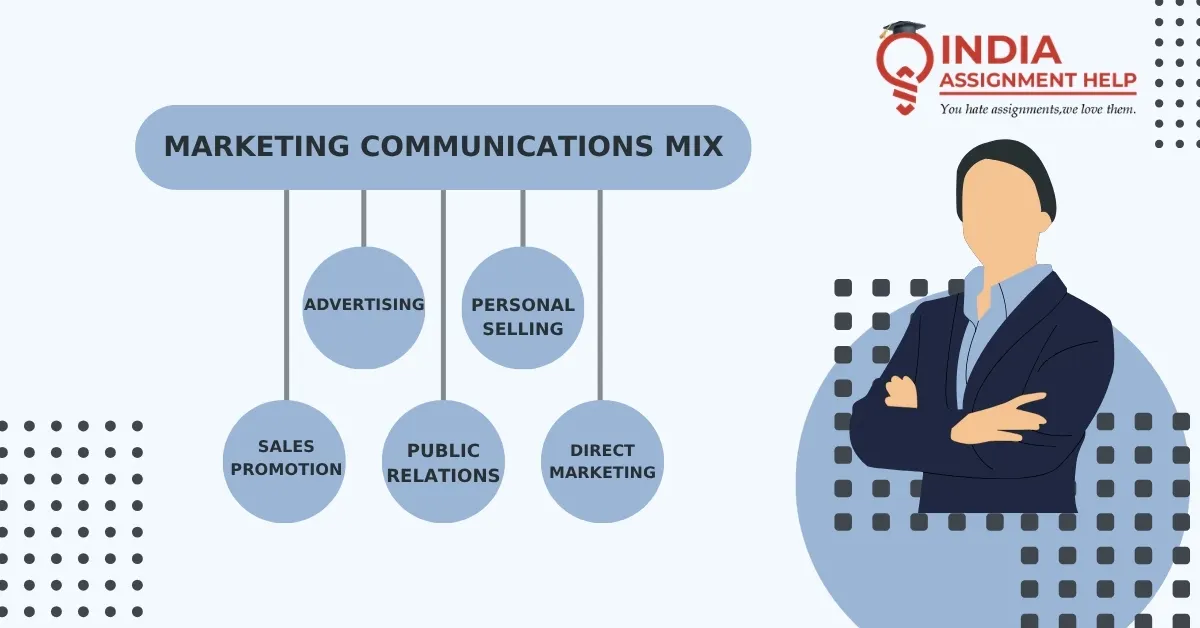
Marketing theories are not just ideas found in textbooks; these are practical frameworks that guide how organisations plan, compete, and build relationships in real markets. Successful brands follow clear principles to shape customer perception and create lasting connections. Among these principles, communication plays a central role.
In today’s global marketplace, consumers are exposed to constant promotional messages through advertising, social media, public relations, and direct interactions. Effective marketing is not about being louder, but about being clear and consistent. The Communications Mix provides a structured way to combine promotional tools so messages work together, creating a stronger and more meaningful market impact.
The Role of the Communications Mix in Marketing Strategy
The Communications Mix explains how a company uses different promotional methods to communicate with its target audience. Instead of relying on only one channel, such as advertising or social media, businesses combine multiple tools to ensure their message is clear, consistent, and effective. This coordinated approach helps align communication efforts with overall marketing goals and business objectives.
In simple terms, it shows how a company presents its value across various platforms while maintaining a strong and consistent brand image. A well-planned strategy ensures that the right message reaches the right audience at the right time. It also allows organisations to measure results and improve future communication efforts. In global markets, communication becomes more complex because cultural differences, language variations, and media preferences vary widely, requiring companies to adapt their messaging carefully without losing brand identity.
Core Tools of the Marketing Communications Mix
The Marketing Communications Mix traditionally consists of five major Marketing communications tools. These tools are most effective when applied in a coordinated and strategic manner.
1. Advertising
Advertising involves paid communication delivered through various media, including television, digital platforms, social networks, radio, and print.
It plays a visible role in shaping awareness and brand recognition. For example, an international technology brand launching a new device may use online video campaigns and search engine advertisements to generate global visibility.
Advertising is valuable because it reaches large audiences quickly and strengthens brand positioning. However, it can be costly and may not provide immediate customer feedback.
2. Sales Promotion
Sales promotion focuses on short-term incentives designed to encourage immediate purchase or trial. Common examples include price discounts, limited-time offers, loyalty rewards, free samples, and coupons.
These strategies are particularly useful during product launches or competitive periods. However, overuse may reduce perceived value if customers begin to expect constant discounts.
Therefore, such activities must align with the broader Communications Mix strategy rather than function independently.
3. Public Relations
Public Relations focuses on managing corporate image and building stakeholder trust. It involves activities such as issuing press releases, securing media coverage, implementing corporate social responsibility initiatives, participating in sponsorship programs, and managing communications during crises.
Unlike advertising, PR often appears through independent media channels, which enhances credibility. In international markets, strong public relations strategies help organisations protect and strengthen their reputation during challenging situations.
4. Personal Selling
Personal selling involves direct interaction between a company representative and a customer. It is particularly important in business-to-business sectors, financial services, and high-value product industries.
Through personal engagement, organisations can provide customised solutions, address customer concerns directly, build long-term relationships with clients, and negotiate terms effectively to meet mutual objectives.
Although resource-intensive, personal selling remains highly effective for complex products requiring a detailed explanation.
5. Direct and Digital Marketing
Digital transformation has significantly expanded promotional strategy. Email campaigns, content marketing, social media engagement, search engine optimisation, and influencer collaborations allow organisations to communicate directly with targeted audiences.
Digital platforms provide measurable insights such as click-through rates and engagement metrics, making them highly adaptable and data-driven.
In modern global markets, digital channels play a central role in ensuring efficient and interactive communication.
The Role of Integrated Marketing Communications in Strategic Coordination
Integrated Marketing Communications means that a company connects all its promotional activities so they support each other. Instead of running separate campaigns with different messages, the company ensures that advertising, social media, public relations, and sales promotions all communicate the same core idea. This helps customers understand the brand clearly. When messages are consistent across platforms, the brand appears more professional, reliable, and trustworthy.
For example, during a global product launch, a company may:
- Use advertising to generate awareness.
- Run digital campaigns to encourage engagement.
- Implement sales promotions to stimulate purchases.
- Apply public relations strategies to strengthen credibility.
- Utilise personal selling for key accounts
When these elements support one another strategically, overall brand impact becomes stronger and more coherent. Students analysing such integration in academic contexts sometimes explore Marketing Assignment Help to structure their evaluation effectively.
Measuring the Effectiveness of Communication Strategy
Measuring communication performance is important because it shows whether marketing efforts are actually working. Many discussions focus on promotional tools, but without measurement, businesses cannot know if their messages are reaching the right audience or influencing decisions. Evaluation makes marketing practical, data-driven, and results-oriented.
Organisations often measure communication effectiveness using:
- Brand awareness levels
- Customer engagement rates
- Website traffic and click-through rates
- Conversion rates
- Customer feedback and reviews
- Return on marketing investment.
These indicators help businesses understand what strategies are successful and what needs improvement. Digital platforms make tracking easier by providing real-time data and detailed analytics. By analysing these results, companies can refine their messages, improve targeting, and allocate budgets more efficiently. Measurement ensures communication decisions are based on evidence rather than assumptions.
Global Challenges in Managing Communication Strategy
Managing the Communications Mix across international markets requires careful consideration. Communication strategies cannot be applied uniformly because consumer behaviour, cultural expectations, and regulatory environments differ significantly from one region to another.
Challenges include:
- Cultural interpretation differences
- Language translation accuracy
- Regulatory restrictions
- Diverse media consumption patterns
- Unequal digital infrastructure
A strategy that succeeds in one country may not achieve comparable results in another due to social, cultural, and structural differences. Therefore, organisations must carefully balance global standardisation with local adaptation to remain relevant and competitive. Students analysing such international marketing challenges sometimes explore Communication Assignment Help to better understand how theoretical frameworks apply in cross-cultural business contexts.
Applying Communication Strategy in Academic Assignments
For marketing students, studying this concept requires more than recalling definitions. Academic tasks typically demand structured argumentation, practical examples, and critical evaluation.
When writing about a communication strategy, students should:
- Define the framework clearly.
- Analyse each promotional element.
- Demonstrate how integration strengthens brand positioning.
- Evaluate advantages and limitations.
- Consider international adaptation challenges.
A common mistake students make is explaining promotional tools without linking them to the overall strategy, which results in weak analysis. Simply defining each tool is not enough. Strong academic work requires critical thinking and clear structure. Students working on complex marketing projects may explore Assignment Help Canada, but success depends on independent analysis and logical reasoning.
Conclusion
The Communications Mix is an important concept in modern marketing. In competitive global markets, companies must carefully coordinate their Marketing communications tools to make sure their message is clear and consistent. Good communication helps customers understand what a brand stands for and why its products or services are valuable.
A well-planned Marketing Communications Mix helps build brand identity, increase customer trust, and support long-term business goals. When all promotional activities work together, they create a stronger overall impact. For students and professionals, understanding this concept makes it easier to see how organisations communicate effectively, connect with different audiences, and remain competitive in changing global markets.