+61 415 139 814
  +91 875 047 8831

The Biggest Problems With Indian Education System In 2026
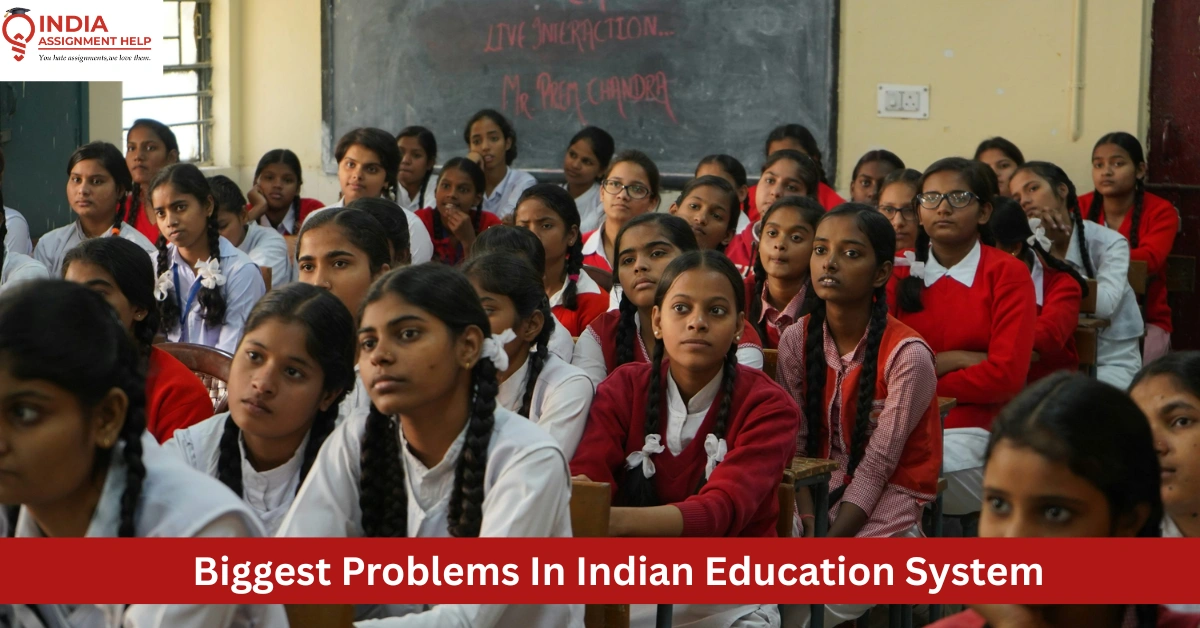
Most students in India basically spend a large portion of their childhood complaining that the education system has wronged them. And most of the time they are not even lying. India has the strangest kind of education system in the world as it seems to be integrating the latest tools like AI to further expand and make education more accessible, whereas there also seems to be a lingering obsession with rote learning and memorisation. No matter how we look at it, the state of the Indian education system has never been the best, which is why our country continues to lag behind global juggernauts like China, USA, and Japan despite having the world’s largest population. In this blog, we will discuss some of the most prevalent problems with Indian education system that should be resolved as quickly as possible if we want to see our country progress in the global arena.
What Are Some Issues In Indian Education System That Parents Often Ignore?
Teens and young people frequently complain that their parents don’t open their eyes to the limitations of Indian education system and continue to foster a culture that slowly begins to resist reform. Here are some of the biggest Indian education system drawbacks that parents tend to ignore.
-
The Illusion Of Learning Through Ed-Tech:-
Parents often mistake the screen time spent of their children on Ed-Tech apps as the amount of time they actually spent on learning. Unfortunately, that is not exactly the case. Parents often don’t track whether their children are actively learning through the Ed-Tech apps or not. They just view the screen time as enough evidence to go off of. This is one of the biggest problems with Indian education system that have emerged as a consequence of the rise of EdTech.
-
The Death Of Soft Skills In Pursuit Of STEM:-
Parents in India are obsessed with science, technology, engineering, and medicine, colloquially known as STEM. They constantly push their children to focus on these disciplines rather than help them build soft skills that employers look for.
-
Micro-Stressing And Ghost Pressure:-
Parents don’t think that asking for a certain grade puts pressure on students; they think it’s a minimum benchmark that they have to meet. In reality, this is one of the biggest issues in Indian education system because it fosters a culture of pressure and a rat-race to meet parents’ expectations.
-
The Narrow Definition Of Success:-
Parents expect their children to excel at everything, but the modern economy demands professionals who are skilled in one specific area rather than being a jack of all trades. This narrow expectation of success that parents have is one of the biggest challenges facing Indian education system.
Limitations Of Indian Education System That Most People Don’t Realise
While there are several problems in the education system of our country, there are some underlying factors that most people tend to ignore. However, we shouldn’t gloss over the dark reality of our education system; instead, we should focus on mending the root causes of the decay experienced by our education system. Here are some of the biggest problems with Indian education system that go largely unnoticed.
-
The Industrial Age Assessment Model:-
The assessment model of Indian education institutes rewards replication of the existing model and compliance with the existing criteria rather than encouraging out-of-the-box thinking. This is why India has relatively less innovation compared to the world’s other largest economies.
-
Decoupling Of Degree And Capability:-
One of the biggest challenges facing Indian education system is that it tends to view degrees and job fitness as the same thing. However, most engineers and management graduates remain unemployed because they lack the industry-specific skills that would have helped them get a job.
-
The Lack Of Interdisciplinary Flexibility:-
In many foreign countries, you can study physics alongside philosophy or coding, and maybe even fine arts. However, one of the persisting issues in Indian education system is that it doesn’t promote interdisciplinary learning, especially in higher education, where it is actually needed.
-
Homogenisation Of Talent:-
The education system of India considers every child to be an equal participant of the same race, as many teachers and parents don’t realise that every child learns at a different rate. Children learn and grow at different rates, and a slight delay can be flagged as the child’s incapacity to succeed in life, which is a common problem in India’s education system.
Why Has India’s Education System Not Improved Over The Years?
India’s education system is not a vessel that has only begun showing cracks now; most of the problems that we discussed have already existed for several decades. However, it does lead you to ask why nobody did anything about it for multiple years. Here are some of the reasons why the Indian education system drawbacks have not been fixed in a long time.
-
The Safety Net Paradox:-
India’s middle class and society in general view education as a survival mechanism rather than a human need. They emphasise the need to study in order to secure a good job, but not to grow and develop oneself. This survivalist and primitive approach to education is one of the biggest issues in Indian education system.
-
Infrastructure vs Quality Focus:-
The government’s education budget has prioritised access to schools over learning outcomes. This is one of the biggest challenges facing Indian education system, as more and more students attend school while they learn nothing different from what previous generations learned. It doesn’t make a substantial difference in the long run.
-
Logistical Challenges:-
The Indian education system is much larger than you might think. There are more than a million schools and over 250 million students, which is larger than the population of almost any country in the world. Implementing a wide-reaching change across a system as large as this would be a logistical nightmare for administrators.
-
The Massive Stake Of The Coaching Industry:-
Lastly, it should be mentioned that one of the biggest problems in Indian education system is easily the overwhelming dominance of the coaching industry. This multi-billion-dollar industry thrives off the pressure that students have to face and continues to promote the exam-centric model of Indian education.
How Can We Overcome The Challenges Facing Indian Education System?
No matter how bleak the future of Indian education seems, we shouldn’t forget that there is still a very good chance that we might see an improvement in the education system in our lifetimes. However, there are some steps that we can take to overcome the Indian education system drawbacks. Here are some of the changes that we can make.
-
Shift From Rote To Competency-Based Learning:-
The new change in CBSE’s exam pattern suggests that the exam will primarily have more competency-based questions rather than questions that require memorisation. A shift from the colonial-era learning model to a more open-ended learning environment can help our students expand their knowledge in a much more valuable way.
-
Teacher Empowerment and Professionalisation:-
Most teachers in India don’t make enough money to pay rent, and they pick up teaching as a safety net measure rather than being passionate about it. This is one of the most serious issues in Indian education system, but if teachers get paid more and they are re-educated to provide holistic education, good returns can likely be expected.
-
Integration of Vocational and Formal Education:-
Higher education institutions should integrate mandatory vocational education in their curriculum to prepare the latest batch of graduates for their roles in industry. Lack of vocational education is the main reason why so many graduates remain unemployed in India.
-
Leveraging EdTech for Personalisation:-
Even though EdTech is a controversial tool in India for some people, it can be used to personalise the learning process. Especially the AI bots that help students learn. One of the biggest limitations of Indian education system is the student’s pace not aligning with the teacher’s pace, but AI personalisation can help us overcome this issue.
Conclusion
In conclusion, we can say that India’s education system is like a village that doesn’t necessarily encourage its children to step out of the village and explore new avenues. Sure, there isn’t anyone stopping you from exploring new areas, but your experiences with the village education system will subconsciously force you to adapt to a village mindset. However, we might be able to overcome the biggest problems in Indian education system with new reforms such as the New Educational Policy. It is just too early to properly map the good and bad that have come as a result of these new changes. If you want to know more about India’s vast education system, feel free to read more blogs at India Assignment Help.